Tie Your Mother Down
Brian May = treble booster into a cranked AC30: saturated but vocal, with huge upper mids and singing sustain. On a Marshall we use Ultra Gain at moderate gain, the Tube Screamer standing in for the treble booster, light compression for sustain, and a mid-forward GE-7 curve.
Front of amp: Cheeky Pint (light) → TS Mini (on) · FX loop: GE-7 (on) → Spark Mini (solos) → Flashback (off) → HOF (on, light).
Marshall DSL20H Ultra Gain — Lead 1
Neck or middle pickup gets closest to the Red Special's warmth; roll your guitar tone knob back to ~7 for leads.
Tube Screamer Mini On — treble-booster stand-in
Moderate drive, tone up, level hot — pushing the amp's front end hard with extra top is exactly what May's Treble Booster does.
Cheeky Pint Compressor On — light
Just a touch to even things out and feed the sustain on held bends. If your Cheeky Pint has a blend knob, set it around 60% wet. It should never audibly "squish".
TC Spark Mini — FX Loop Solo boost
Clean post-gain lift for the solo and the intro melody — the tone stays identical, you just step forward in the mix.
Flashback Mini — FX Loop Bypassed
Off — May's live rig has delays, but in a one-guitar band it muddies the riff. The GE-7 + boost carry the solo.
Hall of Fame Mini — FX Loop On — light
A touch of hall opens up the solo and the intro melody — Brian May's tone always has air around it. Keep it subtle.
Boss GE-7 — FX Loop On — AC30 mid hump
Pushes the Marshall toward the AC30's vocal midrange; the 6.4 kHz cut tames Marshall fizz that May's tone never has. In the loop it reshapes the finished distorted tone — ideal for this kind of amp-voicing trick.
Squier P Bass PJ pickups
Pure neck pickup, tone rolled down — Deacon's warm round thump. Bridge pickup off.
Bass — Ashdown Perfect Ten Squier P Bass
John Deacon: fingers, warm and round. P Bass tone rolled to ~40%. He walks more than you remember — learn the fills, they make the song. (Mix stays at min — it's the line-in blend, not part of your tone.)
The Guitar Before The Riff
On the album, the sound before the main riff is Brian May's multitracked "endless rise" — guitars sliding upward in octaves and crossfading into each other (a Shepard-tone illusion that opens and closes A Day at the Races). It's a studio construction, not a single playable part, but you can fake the character solo with volume-swelled octaves climbing the A major scale:
  Octave shapes (mute the A & G strings), swell each pair in with the volume knob,
  slide between positions, let them bleed together. Slow and free-time.
e|------------------------------------------------------|
B|------------------------------------------------------|
G|------------------------------------------------------|
D|--7/--9/--11/--12/--14/--16/--18/--19~~---------------|
A|------------------------------------------------------|
E|--5/--7/--9/---10/--12/--14/--16/--17~~---------------|
   A    B   C#   D    E    F#   G#   A  ... start over an octave down and repeat
Two lessons that teach exactly this part, with Brian May's harmonies and tabs:
The live arrangement replaces that with a slow, vocal intro melody over D5/C5 chords — Songsterr has a dedicated tab of it ("Tie Your Mother Down intro", first 26 bars at ~100 bpm, Lead Guitar track). Opening phrases:
  Slow, ~100 bpm, heavy vibrato — over D5 / C5 power chords
e|--------------------------|----------------------------------|
B|--------------------------|--10--8--10---10--10--8--10~~-8---|
G|--7--7--7--5--7~~--7--7---|----------------------------------|
D|--------------------------|----------------------------------|

e|------------------------------|-------------------------------------|
B|--8~~--8--8--8--6--8~~--8--6--|-------------------------------------|
G|------------------------------|--10--12--12--12--10-------12h14~~---|
D|------------------------------|----------------------12~~-----------|
                                   ...builds, then the main A riff crashes in
Open the intro tab on Songsterr ↗
Tab Screenshots
Lesson-video tab captures, in playing order:
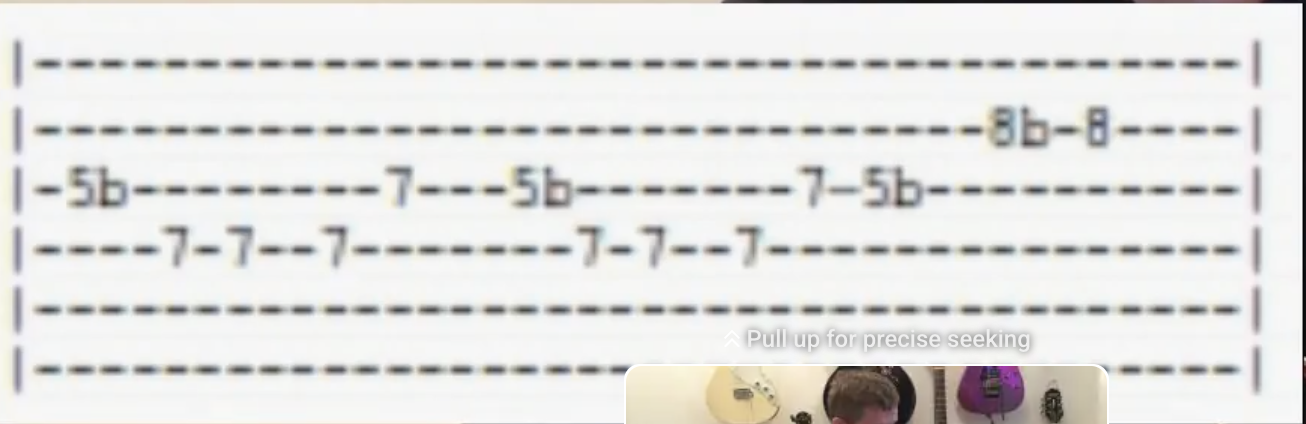
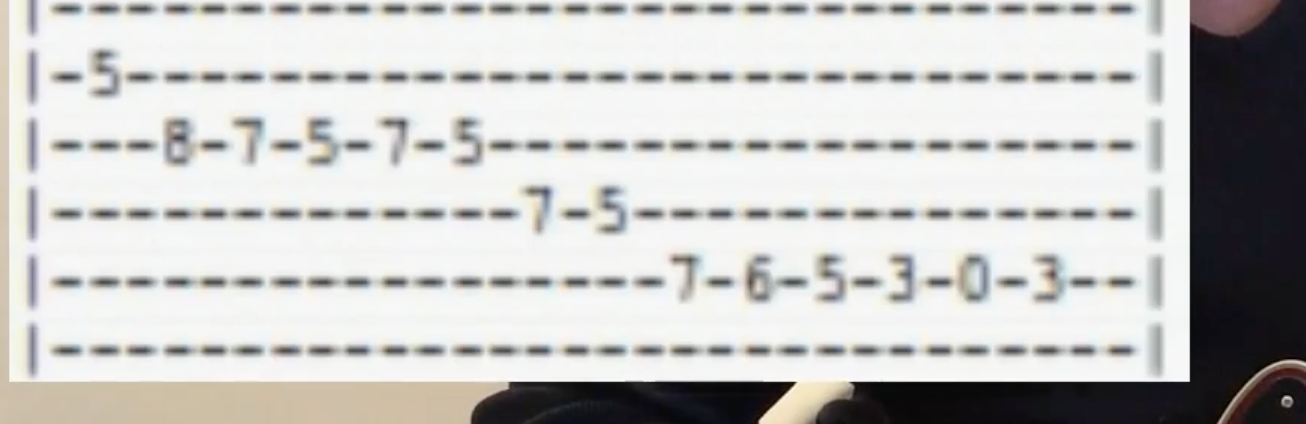
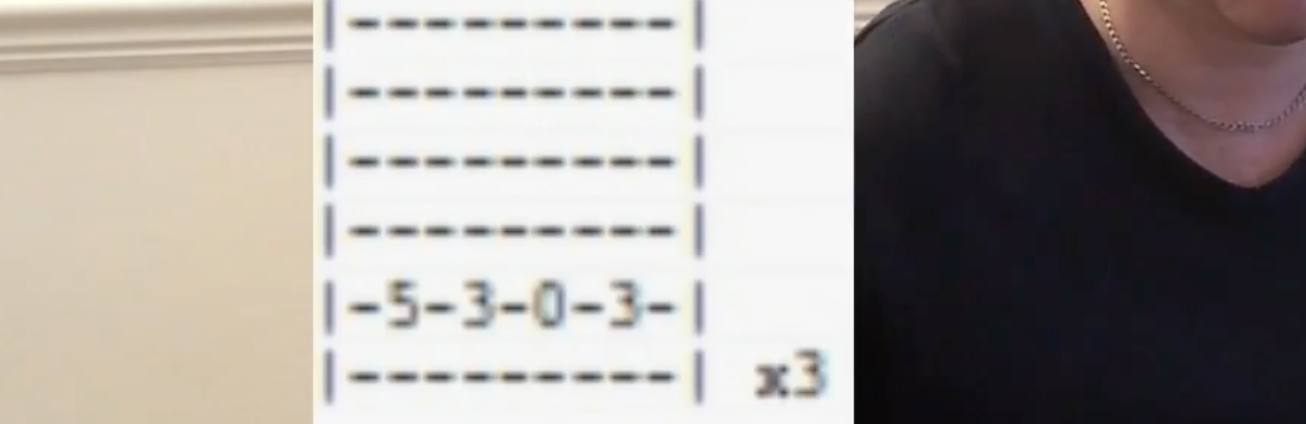

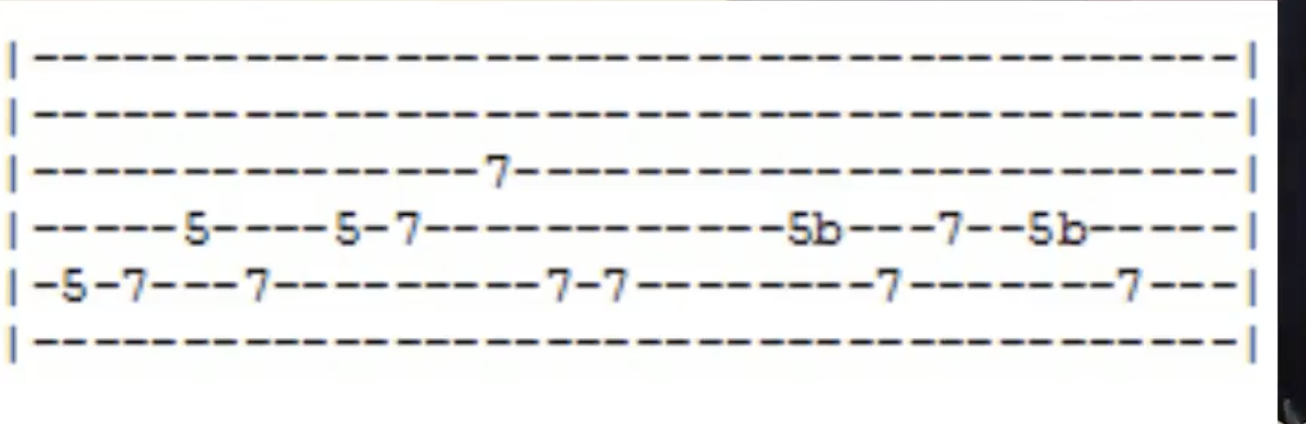
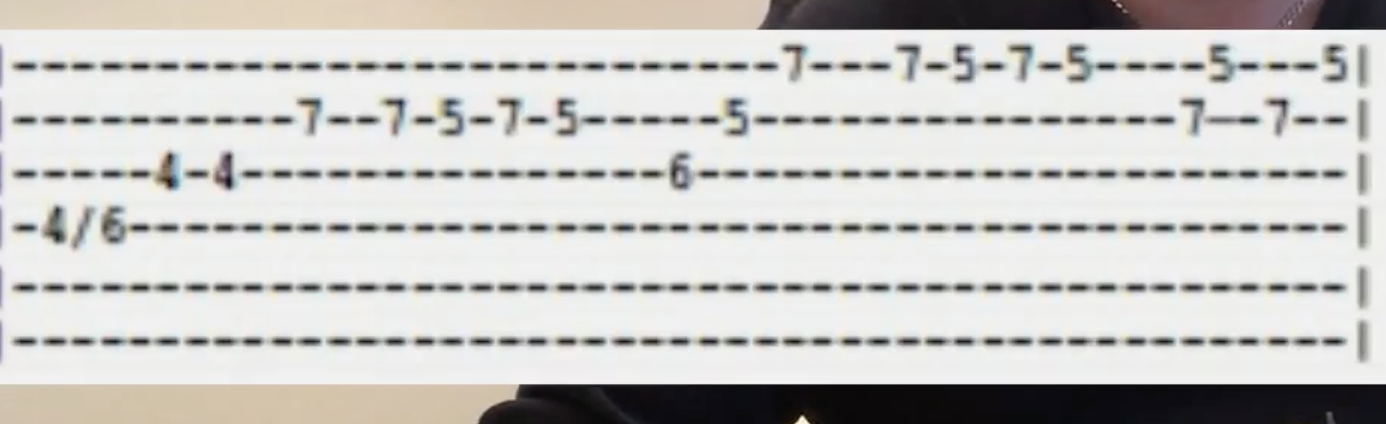
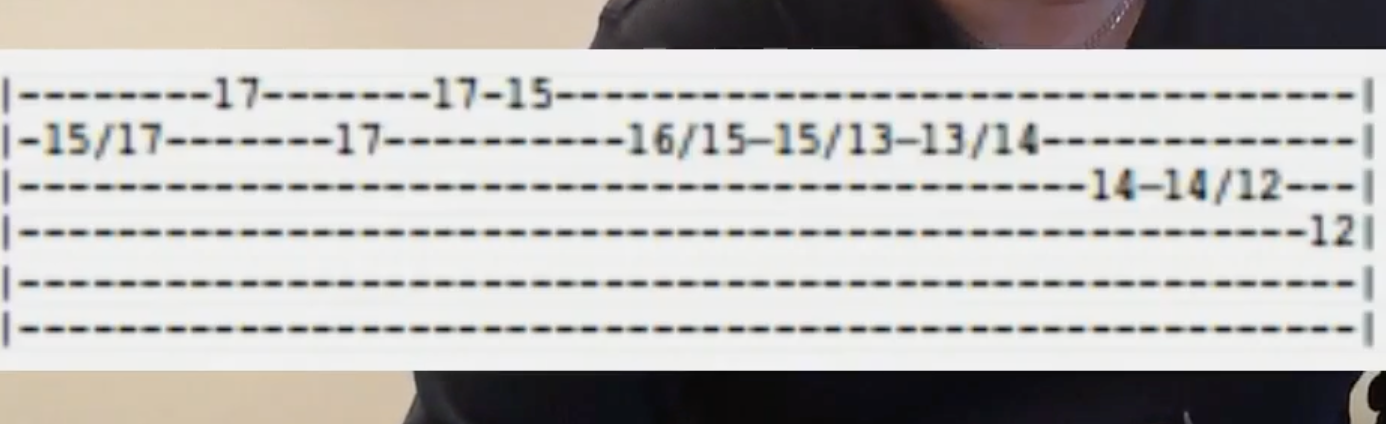
Songsterr Tab
Open "Tie Your Mother Down" tab on Songsterr ↗Opens in a new window — Songsterr blocks embedding in other sites (X-Frame-Options), so it can't be shown inline. "Rhythm" is the main track; switch to "Lead" for the solo. Note: this tab starts at the main riff — the pre-riff intro is covered in the section above.